Alyssa Milano

Saturday, 4 June 2011

Alyssa Milano Biography
Biography


Date of Birth
19 December 1972, Brooklyn, New York, USA

Birth Name
Alyssa Jayne Milano

Nickname
Lyssa
Conan

Height
5' 2" (1.57 m)

Mini Biography
Alyssa Milano is the daughter of Italian-American parents Lin Milano, a fashion designer, and Thomas Milano, a film music editor. Alyssa was born in a working class neighborhood in Brooklyn and grew up in a modest house on Staten Island. One day, her babysitter, who was an aspiring dancer, dragged Alyssa along to a an open audtion for the first national tour of "Annie". But it was Alyssa, not the sitter, who beat out 1,500 other wanna be stage actresses to snag a role. So at the tender age of seven, with her mother in tow, Alyssa joined the tour as July, one of the orphans. After 18 months on the road, Alyssa, who had begun to garner a reputation as an energetic and charismatic young actress, left Annie to be featured in off-Broadway productions and television commercials. Then, in 1983 at age 10, she landed her breakthrough role on the new sitcom "Who's the Boss?" (1984) as Tony Danza's saccharine sweet daughter, "Samantha Micelli", a kid whose native Brooklyn accent rivaled her TV dad's. In order for Alyssa to accept the gig, the Milano family had to uproot and move 3,000 miles to Hollywood.
Alyssa Milano

Alyssa Milano

Alyssa Milano

Alyssa Milano

Alyssa Milano

Alyssa Milano

Alyssa Milano

Alyssa Milano

Alyssa Milano

sexy and hot charmed tribute to alyssa milano and shannen doherty 2

Alyssa Milano The Hot Video

Hot - - Alyssa Milano -Sex
READ MORE - Alyssa Milano

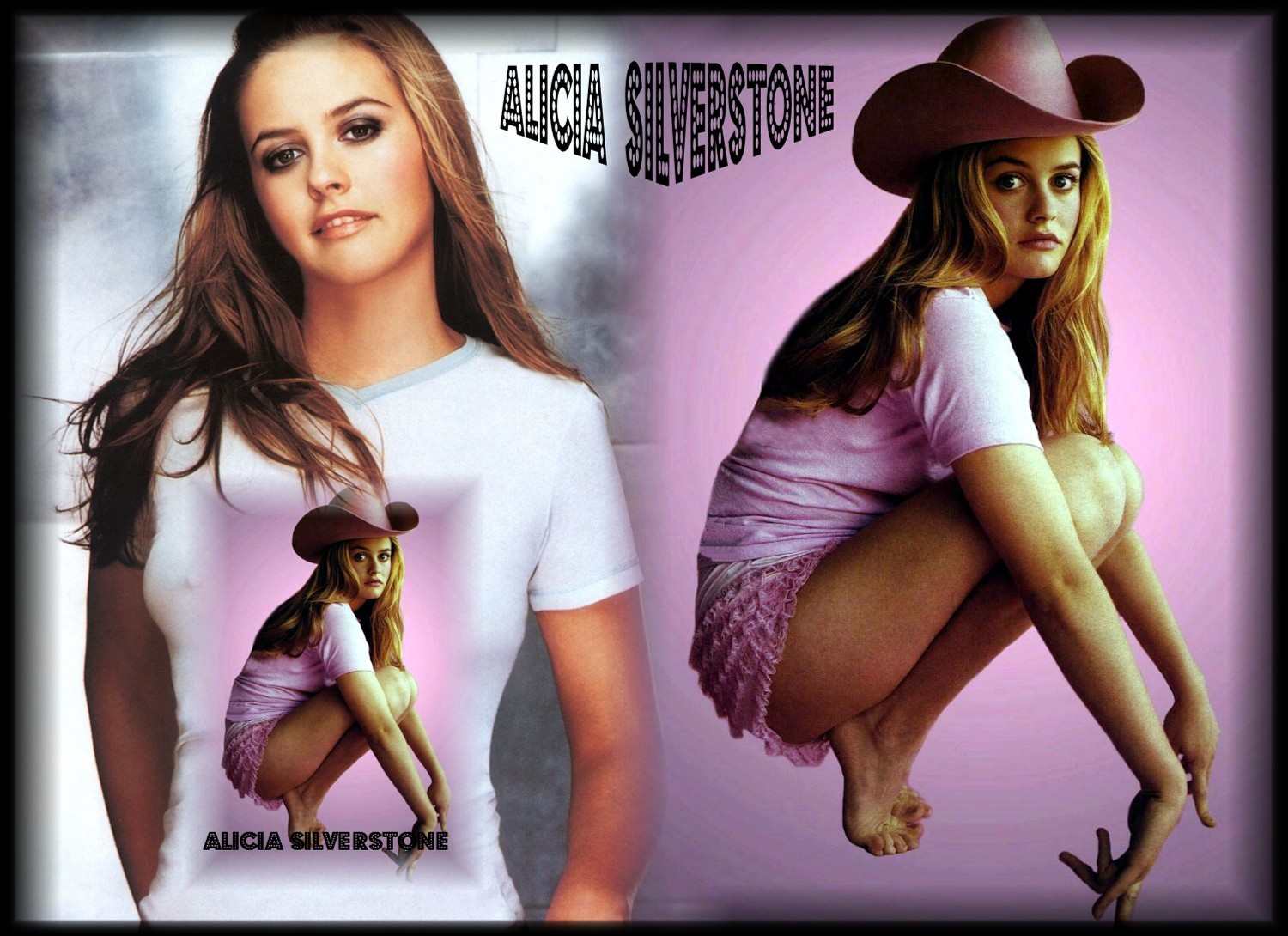
Alicia Silverstone

Friday, 3 June 2011


Alicia Silverstone Biography

Biography


Date of Birth
4 October 1976, San Francisco, California, USA 

Nickname
Queen Slice 

Height
5' 5" (1.65 m) 

Alicia Silverstone was born on October 4, 1976, in San Francisco, California, the youngest of three children to Monty Silverstone, a real-estate investor, and Didi Silverstone, a former flight attendant. Alicia's career began at the tender age of six when her dad took some photos of his young daughter, which eventually led to her getting several television commercials. After a guest spot on "The Wonder Years" (1988) as a literal "dream girl" she moved on to movies. She landed a role in The Crush (1993), a sort of Fatal Attraction (1987) for teenagers in which she portrayed a disturbed young girl obsessed with an older man. The nasty little role didn't impress the critical establishment but it wowed its target audience: teenagers. In fact, the role won her the 1994 MTV Movie Award for "Best Villain" and "Breakthrough Performance". It is interesting to note that during the filming of the movie, Alicia became an emancipated minor in order to get around child labor laws which would have interfered with her working hours. She was a dedicated actress from early on. The film also caught the attention of Aerosmith, who hired her to appear in a string of their music videos. The first of them, "Cryin'", was voted the #1 video of all time on MTV. Silverstone was definitely a hit with the MTV crowd, but larger commercial success still eluded her. That all changed when she landed the role of "Cher" in Amy Heckerling's Clueless (1995). Cher was the antithesis of Alicia's role in "The Crush; this time around she was a rich, naive yet endearing girl from Beverly Hills in search of love in the 1990s. The film was a huge box-office hit and wowed both audiences and critics alike and demonstrated Alicia's strength and bankability. She was hailed as the woman of the hour, and branded the spokeswoman for an emerging young generation. She signed a deal with Columbia Tristar worth $10 million and got the coveted role of Batgirl in the Batman franchise. Also, as part of the package, she got a three-year first-look deal for her own production company, First Kiss Productions. The first film released by First Kiss was Excess Baggage (1997).
Alicia Silverstone

Alicia Silverstone

Alicia Silverstone

Alicia Silverstone

Alicia Silverstone

Alicia Silverstone

Alicia Silverstone

Alicia Silverstone

Alicia Silverstone
Alicia Silverstone - Hot Sexy Bikini Scene [The Crush]

Alicia Silverstone Snubs Elizabeth

Alicia Silverstone Not 'Clueless' About Vegan Health

PETA's Alicia Silverstone Interview
READ MORE - Alicia Silverstone

Audrey Hepburn

Monday, 11 April 2011

Audrey Hepburn Biography

Date of Birth
4 May 1929, Ixelles, Belgium

Date of Death
20 January 1993, Tolochenaz, Switzerland (appendiceal cancer)

Birth Name
Audrey Kathleen Ruston

Height
5' 6½" (1.69 m)

Mini Biography
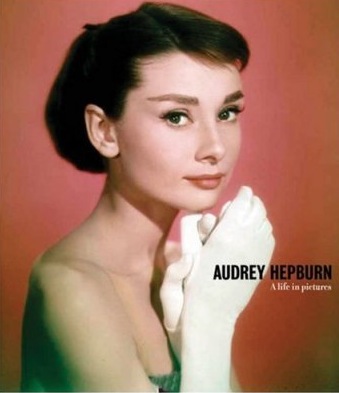
Audrey Hepburn was born on May 4, 1929 in Brussels, Belgium. She really was blue-blood from the beginning with her father, a wealthy English banker, and her mother, a Dutch baroness. After her parents divorced, Audrey went to London with her mother where she went to a private girls school. Later, when her mother moved back to the Netherlands, she attended private schools as well. While vacationing with her mother in Arnhem, Holland, Hitler's army took over the town. It was here that she fell on hard times during the Nazi occupation. Audrey suffered from depression and malnutrition. After the liberation, Audrey went to a ballet school in London on a scholarship and later began a modeling career. As a model, she was graceful and, it seemed, she had found her niche in life - until the film producers came calling. After being spotted modeling by a producer, she was signed to a bit part in the European film Dutch in Seven Lessons (1948) in 1948. Later, she had a speaking role in the 1951 film, Young Wives' Tale (1951) as Eve Lester. The part still wasn't much, so she headed to America to try her luck there. Audrey gained immediate prominence in the US with her role in Roman Holiday (1953) in 1953. This film turned out to be a smashing success as she won an Oscar as Best Actress. This gained her enormous popularity and more plum roles. One of the reasons for her popularity was the fact that she was so elf-like and had class, unlike the sex-goddesses of the time. Roman Holiday (1953) was followed by another similarly wonderful performance in the 1957 classic Funny Face (1957). Sabrina (1954), in 1954, for which she received another Academy nomination, and Love in the Afternoon (1957), in 1957, also garnered rave reviews. In 1959, she received yet another nomination for her role in The Nun's Story (1959). Audrey reached the pinnacle of her career when she played Holly Golightly in the delightful film Breakfast at Tiffany's (1961) in 1961. For this she received another nomination. She scored commercial success again in the espionage caper Charade (1963). One of Audrey's most radiant roles was in the fine production of My Fair Lady (1964) in 1964. Her co-star, Rex Harrison, once was asked to identify his favorite leading lady. Without hesitation, he replied, "Audrey Hepburn in 'My Fair Lady.'" After a couple of other movies, most notably Two for the Road (1967), she hit pay dirt and another nomination in 1967's Wait Until Dark (1967). By the end of the sixties, after her divorce from actor Mel Ferrer, Audrey decided to retire while she was on top. Later she married Dr. Andrea Dotti. From time to time, she would appear on the silver screen. One film of note was Robin and Marian (1976), with Sean Connery in 1976. In 1988, Audrey became a special ambassador to the United Nations UNICEF fund helping children in Latin America and Africa, a position she retained until 1993. She was named to People's magazine as one of the 50 most beautiful people in the world. Her last film was Always (1989) in 1989. Audrey Hepburn died on January 20, 1993 in Tolochnaz, Switzerland, from appendicular cancer. She had made a total of 31 high quality movies. Her elegance and style will always be remembered in film history as evidenced by her being named in Empire magazine's "The Top 100 Movie Stars of All Time."
IMDb Mini Biography By: Denny Jackson

Mini Biography
Hepburn was a cosmopolitan from birth as her father was an English banker and her mother a Dutch baroness. In the movies she appeared as a delicate adolescent, a look which remained until her last movie Always (1989) directed by Steven Spielberg. Her career as actress began in the English cinema and after having been selected for the Broadway play "Gigi" she debuted in Hollywood in 1953. With Roman Holiday (1953) she won an Oscar; her favorite genres were the comedies like Sabrina (1954) or Love in the Afternoon (1957). At the end of the sixties she retired from Hollywood but appeared from time on the set for a few films. From 1988 on she worked also for UNICEF.
IMDb Mini Biography By: Volker Boehm

Spouse
Andrea Dotti (18 January 1969 - 1982) (divorced) 1 child
Mel Ferrer (25 September 1954 - 5 December 1968) (divorced) 1 child


Trade Mark
Her elegant beauty
Often cast opposite leading men who were considerably older than her.


Trivia
Was first choice for the lead in A Taste of Honey (1961).
Ranked #50 in Empire (UK) magazine's "The Top 100 Movie Stars of All Time" list. [October 1997]
Mother of Sean H. Ferrer, with first husband, Mel Ferrer.
Son, Luca Dotti (b. 8 February 1970), with second husband, Dr. Andrea Dotti.
Chosen by People magazine as one of the 50 Most Beautiful People in the world. [1990]
After Wait Until Dark (1967) was offered the leads in Goodbye, Mr. Chips (1969), 40 Carats (1973), Nicholas and Alexandra (1971), The Exorcist (1973), One Flew Over the Cuckoo's Nest (1975), A Bridge Too Far (1977) and The Turning Point (1977) but decided to stay in retirement and raise her sons.
Interred in Tolochenaz, Vaud, Switzerland.
Chosen by Empire magazine as one of the 100 Sexiest Stars in film history (#8). [1995]
Turned down the film Gigi (1958) after creating the character in the Broadway non musical play.
Everyone remembers when Marilyn Monroe serenaded President John F. Kennedy on his birthday in 1962. What is often forgotten is that Audrey Hepburn sang "Happy Birthday Mr. President" to JFK for his final birthday in 1963.
Had a breed of tulip named after her in 1990.
Died on January 20, 1993, the 67th birthday of Patricia Neal. They starred together in Breakfast at Tiffany's (1961).
She won the 1953 Best Actress Academy Award for Roman Holiday (1953). On March 25th, 1954, she accepted the award from the much revered Academy president Jean Hersholt. After accepting the award, Audrey kissed him smack on the mouth, instead of the cheek, in her excitement. Minutes after accepting her 1953 Oscar, Audrey realized that she'd misplaced it. Turning quickly on the steps of the Center Theater in New York, she raced back to the ladies' room, retrieved the award, and was ready to pose for photographs.
Christened simply Audrey Kathleen Ruston, her mother Baroness Ella Van Heemstra temporarily changed the actress' name from Audrey to Edda during the war, feeling that "Audrey" might indicate her British roots too strongly. During the war, being English in occupied Holland was not an asset; it could have attracted the attention of the occupying German forces and resulted in confinement or even deportation. After the war, her father, Joseph Victor Anthony Ruston, found documents about his ancestors, some of whom bore the name Hepburn. This is when he added it to his name, which caused her daughter to have to legally add Hepburn to her name as well, thus Audrey Kathleen Hepburn-Ruston.
Was fluent in English, Spanish, French, Dutch/Flemish and Italian.
Was briefly considered for the main role in Cleopatra (1963) but the part went to Elizabeth Taylor
She confessed to eating tulip bulbs and tried to bake grass into bread during the hard days of World War II.
Audrey felt that she was miscast as Holly Golightly in Breakfast at Tiffany's (1961) although it was one of her most popular roles.
Was trained as a dental assistant before making it big.
Broke her back during filming of a horse-riding scene in The Unforgiven (1960).
Henry Mancini said of her: "'Moon River' was written for her. No one else had ever understood it so completely. There have been more than a thousand versions of 'Moon River', but hers is inquestionably the greatest".
Turned down a role in the film The Diary of Anne Frank (1959) because, as a young girl in Holland during the war, she had witnessed Nazi soldiers publicly executing people in the streets and herding Jews onto railroad cars to be sent to the death camps. She said that participating in the film would bring back too many painful memories for her.
Like Humphrey Bogart, Hepburn also starred in five of the movies listed by American Film Institute in its Top 100 U.S. love stories (2002). They are Roman Holiday (1953), ranked #4 on the list, Sabrina (1954) ranked #54, which co-starred Bogart, My Fair Lady (1964) ranked #12, Two for the Road (1967) at #57 and Breakfast at Tiffany's (1961) #61.
During World War II, 16-year-old Audrey was a volunteer nurse in a Dutch hospital. During the battle of Arnhem, Hepburn's hospital received many wounded Allied soldiers. One of the injured soldiers young Audrey helped nurse back to health was a young British paratrooper - and future director - named Terence Young. More than 20 years later, Young directed Hepburn in Wait Until Dark (1967).
Measurements: 34A-20-34 (as recorded in 1953), (Source: Celebrity Sleuth magazine)
In 1954, she was presented with her Best Actress Oscar for Roman Holiday (1953) by Jean Hersholt. In 1993, she was posthumously awarded the Jean Hersholt Humanitarian Award.
In Arnhem, Holland, during the Second World War, she worked with the Dutch Underground, giving ballet performances to collect donations for the anti-Nazi effort.
Presented the Best Picture Oscar at the Academy Awards four times (in 1955, 1960, 1966, and 1975) more than any other actress.
Told People Magazine that she was very self-conscious about her size-10 feet.
She was voted the 21st Greatest Movie Star of all time by Entertainment Weekly.
In 1993 she became the thirteenth performer to win the Triple Crown of Acting. Oscar - Best Actress for Roman Holiday (1953), Tony for Best Actress in a Play for "Ondine" (1954) and Emmy for Outstanding Individual Achievement - Informational Programming for "Gardens of the World with Audrey Hepburn" (1993).
Was fashion designer Hubert de Givenchy's muse, who dressed her for the films Sabrina (1954), Funny Face (1957), Love in the Afternoon (1957), Breakfast at Tiffany's (1961), Paris When It Sizzles (1964), How to Steal a Million (1966), Charade (1963) and Love Among Thieves (1987) (TV).
In 1996 the British magazine Harpers & Queen conducted a poll to find the most fascinating women of our time. She was in the #1 spot.
As of 2005, she is one of only nine performers to win an Oscar, a Tony, an Emmy and a Grammy Award.
She was of Belgian, Dutch, English and Irish descent.
Followed winning the Academy Award for Roman Holiday (1953) with winning Broadway's 1954 Tony Award as Best Actress (Dramatic) for "Ondine."
Voted #1 in TheAge.com's Top 100: Natural Beauties of all time.
She owned a Yorkshire Terrier called "Mr. Famous".
She was voted the 18th Greatest Movie Star of all time by Premiere Magazine.
Was named #3 on The American Film Institute's 50 Greatest Screen Legends
Her biggest film regret was not getting the Anne Bancroft role in The Turning Point (1977). "That was the one film", she later admitted, "that got away from me."
Is portrayed by Jennifer Love Hewitt in The Audrey Hepburn Story (2000) (TV)
When she failed to receive an Academy Award nomination for her role as Eliza Doolittle in My Fair Lady (1964), Katharine Hepburn wired her with a message of encouragement: "Don't worry about it. You'll get it one day for a part that doesn't rate it." Ironically, when Audrey's next (and last) nomination came for Wait Until Dark (1967) in 1967, Hepburn beat her in Guess Who's Coming to Dinner (1967) - in a part that arguably didn't rate it.
Her character in Funny Face (1957) was inspired by Suzy Parker, who made a fashionable cameo appearance in the film (her first film) in the "Think Pink" sequence.
According to her biography, "Audrey Hepburn: An Intimate Portrait", she made a vow to herself never to exceed 103 pounds. With the exception of her pregnancies, she succeeded.
Turned down the title role in Gigi (1958) to make Funny Face (1957). Ironically, her agent initially rejected the film, but Hepburn overrode the decision after reading the script. Her mother, Baroness Ella Van Heemstra, makes a cameo appearance as a sidewalk café patron, and her Yorkshire terrier "Mr. Famous" appears as the dog in the basket during the "Anna Karenina" train shot. Hepburn did not want to be separated from husband Mel Ferrer, so filming of the Paris scenes was timed to coincide with Ferrer's filming of Elena and Her Men (1956). Paris' unseasonably rainy weather had to be worked into the script, particularly during the balloons photo shoot scene. During filming of the Paris scenes, much of the crew and cast were on edge because of riots and political violence that were gripping the city. The soggy weather played havoc with the shooting of the wedding dress dance scene. Both Fred Astaire and Hepburn were continually slipping in the muddy and slippery grass. In "Funny Face" she was lucky enough to sing several songs. Her next full musical, My Fair Lady (1964), had her singing voice dubbed by Marni Nixon, much to Hepburn's disappointment. The face portrait unveiled in the darkroom scene was photographed by Richard Avedon. The film was shot back-to-back with Love in the Afternoon (1957).
According to director William Friedkin, Audrey was Warner Bros. first choice for the role of Chris MacNeil in The Exorcist (1973) after her box-office successes with the studio's The Nun's Story (1959), My Fair Lady (1964) and Wait Until Dark (1967). She would only agree to star if the film were made in Rome. Both Friedkin and writer William Peter Blatty rejected the proposal.
Her performance as Holly Golightly in Breakfast at Tiffany's (1961) is ranked #32 on Premiere Magazine's 100 Greatest Performances of All Time (2006).
Asked for the part of Emma Jacklin in The Turning Point (1977) but Anne Bancroft had already been cast in the role.
Hepburn was diagnosed with appendiceal cancer in 1992 (not colon cancer, as it is often mistakenly called). The cancer spread into the lining of her small intestine. She had one foot of intestine removed in surgery and went through chemotherapy, but in a second surgery it was decided that the cancer had spread too far and could not be treated.
Lived together with Robert Wolders in the final years of her life.
The US Postal Service issued a 37 cent commemorative stamp honoring her as a Hollywood legend and humanitarian (2003).
Her famous "little black dress" from Breakfast at Tiffany's (1961), designed by Hubert de Givenchy, was sold at a Christie's auction for approximately $920,000 (5 December 2006).
Was voted "most beautiful woman of all time" by the readers of "New Woman" magazine (2006).
Godmother of Victoria Brynner, the daughter of Doris Kleiner and Yul Brynner.
Saved the life of her friend Capucine (who attempted suicide on several occasions).
In Italy she was almost exclusively dubbed by Maria Pia Di Meo, except in her first two films (Roman Holiday (1953) (Vacanze Romane) and Sabrina (1954)) and in Green Mansions (1959) (Verdi dimore), where she was dubbed by Fiorella Betti.
She was presented with her 1953 Best Actress Oscar for "Roman Holiday" by actor and humanitarian Jean Hersholt. Forty years later she would posthumously receive the Jean Hersholt Humanitarian Award by the Academy of Motion Picture Arts and Sciences for her work with UNICEF.
As of 2007, she and Katharine Hepburn are the only "Best Actress" Oscar-winners to share a last name. Of course, they are not related.
Met future husband Mel Ferrer at a party hosted by Gregory Peck. It was Ferrer who sent Hepburn the script for "Ondine", which Hepburn agreed to play on Broadway, in which the couple co-starred.
Godfather of her first child, Sean H. Ferrer, was Scottish writer, A.J. Cronin.
Was friends with Eva Gabor.
Once admitted that she would not have accepted the role of Eliza Dolittle in My Fair Lady (1964) if she had known that producer Jack L. Warner planned to have all of her singing dubbed.
Hepburn was offered the role of a Japanese bride opposite Marlon Brando in Sayonara (1957) but turned it down. She later explained that she "couldn't possibly play an Oriental. No one would believe me; they'd laugh. It's a lovely script, however, I know what I can and can't do. And if you did persuade me, you would regret it, because I would be terrible".
Broke her back during filming of a horse-riding scene in The Unforgiven (1960).
Won a 1968 Special Tony Award (New York City).
Although not diagnosed with appendicular cancer until 1 November 1992, her son Sean H. Ferrer believes it had probably been developing over the course of the previous five years.
Was considered for the part of Tony Gromeko in Doctor Zhivago (1965), but Geraldine Chaplin was cast instead.
Was a close friend of French actress Capucine.
Was a three pack a day smoker.
Died on the day of Bill Clinton's first inauguration as President of the United States.
In 1992 President George Bush presented her with the Presidential Medal of Freedom in recognition of her work for UNICEF.
Her mother was Ella baroness van Heemstra (1900-1984).
Nearly married James (later Lord) Hanson, a businessman, after filming Roman Holiday (1953). An ivory satin wedding gown was designed by the Fontana sisters, but Hepburn called off the wedding at the last minute.
Her last humanitarian mission for UNICEF was to Somalia in the summer of 1992. She was reported to have begun feeling stomach pains towards the end of the trip, which sadly turned out to be cancer.
Returned to work nine months after giving birth to her son Sean H. Ferrer in order to begin filming Breakfast at Tiffany's (1961).
Suffered from hydrophobia, a condition that severely hampered some of her scenes in Two for the Road (1967). When a shot called for co-star Albert Finney to throw Hepburn into a swimming pool, divers were placed on standby (off-camera) just to placate the actress after it was learned that she had a morbid fear of water.
During his acceptance speech honoring her work for UNICEF, Sean H. Ferrer dedicated his mother's Jean Hersholt Humanitarian Award to "the children of the world".
Is one of the only 12 people who are an EGOT, which means that she won at least one of all of the four major entertainment awards: Emmy, Grammy, Oscar and Tony. The other ones in chronological order are Richard Rodgers, Barbra Streisand, Helen Hayes, Rita Moreno, Liza Minnelli, John Gielgud, Marvin Hamlisch, Jonathan Tunick, Mel Brooks, Mike Nichols and Whoopi Goldberg. Barbra Streisand, however, won a Special Tony Award, not a competitive one, and Liza Minnelli won a Special Grammy.
She donated all the salaries she earned for her final projects to UNICEF (Love Among Thieves (1987) (TV), Always (1989), and "Gardens of the World with Audrey Hepburn" (1993)).
Art was one of her longtime hobbies, she drew pictures of stories when she was a child to distract herself from chronic hunger pains during WWII. As an adult, she took up painting to pass time while pregnant with her son, Luca. Samples of her work can be seen in the book "Audrey Hepburn: An Elegant Spirit".


Personal Quotes
I never thought I'd land in pictures with a face like mine.
I was asked to act when I couldn't act. I was asked to sing "Funny Face" when I couldn't sing and dance with Fred Astaire when I couldn't dance - and do all kinds of things I wasn't prepared for. Then I tried like mad to cope with it.
Remember, if you ever need a helping hand, it's at the end of your arm. As you get older, remember you have another hand: the first is to help yourself, the second is to help others.
I was born with an enormous need for affection, and a terrible need to give it.
My own life has been much more than a fairy tale. I've had my share of difficult moments, but whatever difficulties I've gone through, I've always gotten a prize at the end.
For me, the only things of interest are those linked to the heart.
I never think of myself as an icon. What is in other people's minds is not in my mind. I just do my thing.
I probably hold the distinction of being one movie star who, by all laws of logic, should never have made it. At each stage of my career, I lacked the experience.
My look is attainable. Women can look like Audrey Hepburn by flipping out their hair, buying the large sunglasses, and the little sleeveless dresses.
Success is like reaching an important birthday and finding you're exactly the same.
I know I have more sex appeal on the tip of my nose than many women in their entire bodies. It doesn't stand out a mile, but it's there.
[talking about a severe coughing attack she had when she was six weeks old, slowly turning blue and finally stopping breathing until her mother's prayers and spanking brought her back to life] If I were to write a biography, it would start like this: I was born in Brussels, Belgium, on May 4, 1929 . . . and I died six weeks later.
[about her "comeback" in 1976] Whatever happens, the most important thing is growing old gracefully. And you can't do that on the cover of a fan magazine.
It's that wonderful old-fashioned idea that others come first and you come second. This was the whole ethic by which I was brought up. Others matter more than you do, so 'don't fuss, dear; get on with it.'
[On filming Funny Face (1957), while coping with extreme Paris weather and a grumpy co-star] Here I've been waiting for 20 years to dance with 'Fred Astaire', and what do I get? Mud in my eye!
I think sex is overrated. I don't have sex appeal and I know it. As a matter of fact, I think I'm rather funny looking. My teeth are funny, for one thing, and I have none of the attributes usually required for a movie queen, including the shapeliness.
You can't let yourself worry when you play a classic role. I'm an introvert anyway. Playing the extroverted girl in Breakfast at Tiffany's was the hardest thing I ever did. If I had stopped to think about comparison with my predecessors as Eliza, I'd have frozen completely. But I loved this part. Eliza is vulnerable, but she has a beautiful inner strength. I made myself forget the problems. I threw myself into it and tried to make it me.
I understood the dismay of people who had seen Julie on Broadway. Julie made that role her own, and for that reason I didn't want to do the film when it was first offered. But Jack Warner never wanted to put Julie in the film. He was totally opposed to it, for whatever reason. Then I learned that if I turned it down, they would offer it to still another movie actress. So I felt I should have the same opportunity to play it as any other film actress. - On My Fair Lady (1964)
You can even say that I hated myself at certain periods. I was too fat, or maybe too tall, or maybe just plain too ugly ... you can say my definiteness stems from underlying feelings of insecurity and inferiority. I couldn't conquer these feelings by acting indecisive. I found the only way to get the better of them was by adopting a forceful, concentrated drive.
Audrey Hepburn
Audrey Hepburn

Audrey Hepburn

Audrey Hepburn

Audrey Hepburn Party Makeup for Teens- (in HD)
READ MORE - Audrey Hepburn

Peggy Lee

Peggy Lee Biography

Date of Birth
26 May 1920, Jamestown, North Dakota, USA

Date of Death
21 January 2002, Bel Air, Los Angeles, California, USA (heart attack)

Birth Name
Norma Delores Egstrom

Height
5' 6" (1.68 m)

Mini Biography
Peggy Lee was Born Norma Dolores Egstrom in Jamestown, North Dakota, on May 26, 1920. At age four her mother died. Peggy's father, a railroad station agent, remarried but later left home, leaving Peggy's care entrusted to a stepmother who physically abused her. Peggy later memorialized this in the calypso number "One Beating a Day", one of 22 songs she co-wrote for the autobiographical musical "Peg", in which she made her Broadway debut in 1983 at the age of 62. As a youngster Peggy worked as a milkmaid, later turning to singing for money in her teens. While singing on a local radio station in Fargo, the program director there suggested she change her name to Peggy Lee. Peggy's big break came when Benny Goodman hired her to sing with his band after hearing her perform. Peggy shot to stardom when she and Goodman cut the hit record "Why Don't You Do Right?" and went out on her own to record such classics as "Fever", "Lover", "Golden Earrings", "Big Spender" and "Is That All There Is?" - the latter winning her a Grammy Award in 1969. Peggy's vocal style provided a distinctive imprint to countless swing tunes, ballads and big band numbers. She was considered the type of performer equally capable of interpreting a song as uniquely as Billie Holiday, Ella Fitzgerald and Bessie Smith. Her 1989 album, "Peggy Sings the Blues", was a Grammy Award nominee. Peggy was a prolific songwriter and arranger and her 1990 "The Peggy Lee Songbook" contained four songs she wrote with guitarist John Chiodini. Peggy also wrote for jazz greats Duke Ellington, who called her "The Queen", and Johnny Mercer, and composer Quincy Jones. Also in 1990 Peggy was awarded the coveted Pied Piper Award presented by the American Society of Composers, Authors and Publishers (ASCAP). She made her mark in Hollywood as an actress, winning an Academy Award nomination for her role as the hard-drinking singer in the jazz saga, Pete Kelly's Blues (1955) and composed songs for the 1955 Walt Disney animated classic Lady and the Tramp (1955). The animated film featured a character named Peg, a broken-down old showgirl of a dog, whose provocative walk was based on the stage-prowl of Peggy Lee. Later she sued Disney and won a landmark legal judgment for a portion of the profits from the videocassette sale of the film. Peggy's private life was racked by physical ailments, a near-fatal fall in 1976, diabetes and a stroke in 1998. She was married four times, all ending in divorce. She and first husband, guitarist Dave Barbour, had a daughter, Nicki, her only child. Peggy and Dave were on the verge of a reconciliation in 1965, but he died of a heart attack before the couple got back together. Peggy has left a vast legend of music that is constantly finding new generations of fans.
IMDb Mini Biography By: Kelly E.F. Wiebe (senhue@mts.net

Mini Biography
Born Norma Dolores Egstrom in Jamestown, North Dakota, sultry song stylist Peggy Lee was the product of a troubled, abusive childhood, who used singing as an escape. She found work on a radio station as a teenager in Fargo and quickly changed her name to Peggy Lee. An early move to Hollywood at age 17 proved disappointing, returning north to her radio job within a short time. A Chicago nightclub appearance led to her replacing vocalist Helen Forrest with the Benny Goodman Orchestra in 1941, where she soon earned star status for such songs as "Blues in the Night", "The Way You Look Tonight", and, her signature song, "Why Don't You Do Right?". She struck out on her own two years later and earned more hit records with "It's a Good Day" and "Manana", which she wrote.

An elegant, intimate performer with a minimalist style, her recording and supper club fame eventually led to movie offers, notably opposite Danny Thomas in a remake of The Jazz Singer (1952). Her peak, however, came with her vibrant, Oscar-nominated performance as a singer who battles the bottle in Pete Kelly's Blues (1955). She also provided singing and speaking voices along with lyrics for Disney's Lady and the Tramp (1955) in the same year. But music was her first love and she continued on the road, crossing over occasionally from the easy jazz to pop field with such monster hits as "Fever" in 1958 and the Grammy-winning "Is That All There Is?" in 1969. In 1983, she went to Broadway in an autobiographical production called "Peg". It was one of the few projects in her life that was not a success. Her later years were dogged by ill health and lawsuits, winning $2.3 million in 1991 against Disney to recoup royalties from videocassette sales of "Lady and the Tramp" and, just a week before her death, earning a preliminary approval of $4.75 million in a class lawsuit (she was the lead plaintiff of a group of Decca recording artists) for royalties against Universal Music Group. Semi-confined to a wheelchair since the 80s due to circulation problems and accidental falls, she valiantly continued performing until suffering a stroke in 1998. She died of a heart attack three years later. "Miss Peggy Lee", as she was always introduced, was a class act all the way and, in talent, is often deemed a smooth, self-contained combination of Ella Fitzgerald and Billie Holiday.
IMDb Mini Biography By: Gary Brumburgh / gr-home@pacbell.net

Spouse
Jack Del Rio (22 February 1964 - 1965) (divorced)
Dewey Martin (25 April 1956 - 1959) (divorced)
Brad Dexter (4 January 1953 - 3 November 1953) (divorced)
Dave Barbour (8 March 1943 - 16 May 1951) (divorced) 1 child


Trivia
Suffered stroke. [27 October 1998]
Received the Women's International Center (WIC) Living Legacy Award in 1987.
Has one daughter, Nicki Lee Foster (born 1944), from her marriage to late guitarist Dave Barbour.
A diabetic, Lee was often troubled by weight and glandular problems. In 1961, she was felled by double pneumonia and in 1976, she had a near-fatal fall in a New York hotel. She was again seriously injured in another fall in Las Vegas in 1987. In early 1985, she underwent four angioplasties - balloon surgery to open clogged arteries - and resumed her singing tour. While appearing in New Orleans in October 1985, she underwent double-bypass heart surgery. In 1998, she suffered a stroke which impaired her speech, requiring therapy to recover.
Her work on the 1955 Disney film, Lady and the Tramp (1955) led to a landmark legal judgment 36 years later when a California court awarded her $2.3 million after she sued for a portion of the profits from the videocassette sale of the movie. The case hinged on a clause in her pre-video-era contract barring the sale of "transcriptions" of the movie without her approval.
She decided to become a singer at age 14, when she earned 50 cents a night at gigs for local PTAs. A few years later she traveled to Fargo where she sang on a local radio station. The WDAY program director suggested a name change, and she became Peggy Lee.
Has a rose named after her. The "Peggy Lee" rose is pink with a touch of peach.
Voiced four different characters in Lady and the Tramp (1955): Darling, Peg, and both the Siamese cats.
Inducted into the Big Band and Jazz Hall of Fame in 1992.
In addition to her accomplishments as a singer, she was a very fine songwriter, with several hit songs to her credit, many of them written in collaboration with her first husband, Dave Barbour. Her song writing credits include: "It's a Good Day," "Manana," "I Don't Know Enough About You" (all with Barbour), "Bella Notte," "Peace on Earth" (both with Sonny Burke), "Don't Forget to Feed the Reindeer," and "So, What's New?" (with John Pisano and Ervin "Bud" Coleman).
Ranked #93 on VH1's 100 Greatest Women in Rock N Roll
At the time of her death, she was leading a potentially groundbreaking class-action lawsuit vs. Universal Music, a unit of Vivendi Universal. In early January 2002, the music giant agreed to pay $4.75 million in back royalties to as many as 300 performers to settle the suit.
She had pneumonia when she gave birth to her daughter and almost died.
She became engaged to her ex-husband David Barbour, who divorced her because he felt his drinking was not good for his daughter, four days before he died. He claimed he had been sober thirteen years by then and was ready to re-marry her.
Is portrayed by Gwyneth Paltrow in Infamous (2006)
The original line-up on her 1958 smash hit "Fever" comprised: Jack Mondragon (double bass), Shelly Manne (drums) and Howard A. Roberts (electric guitar). It was Peggy Lee's idea to eliminate Roberts' guitar, entirely, and have him provide the funky finger-snapping instead. Manne used his hands and fingers (rather than drumsticks) to tap his snare drum and tom-tom to the accompaniment of his bass drum.
Inducted into the Songwriters Hall of Fame in 1999.
Peggy Lee's final words, "Virgina doesn't come in till Tuesday." Virgina Bernard was her maid for many years.
Is the namesake of the "Margarita" cocktail. In 1948 Santos Cruz, a bartender at the famed Texas nightclub the Balinese Room, mixed up a new drink especially for her. He named it for the Spanish version of "Margaret" which is the formal version of "Peggy".
She was awarded a Star on the Hollywood Walk of Fame for Recording at 6319 Hollywood Boulevard in Hollywood, California.
Recipient of the North Dakota Roughrider Award.


Personal Quotes
I loved acting, but my agents never brought me scripts. I was worth a lot more to them on the road.
"Mamie Eisenhower was our First Lady at the time, and she always wore bangs. The little dog has bangs and her name in the script was Mamie, so Walt [Disney] was afraid someone might think we were being a little less than polite about the First Lady. That's why I have the honor of having the character named after me." - referring to her animated doggie character "Peg" in Lady and the Tramp (1955).
I sang before I could talk.
On personal power: Some of us just go along...until that marvelous day people stop intimidating us -- or should I say we refuse to let them intimidate us?
 Peggy Lee

Peggy Lee
Peggy Lee

Peggy Lee

Peggy Lee: Fever!

READ MORE - Peggy Lee

Gypsy Rose Lee

Gypsy Rose Lee Biography

Date of Birth
9 February 1911, Seattle, Washington, USA

Date of Death
26 April 1970, Los Angeles, California, USA (lung cancer)

Birth Name
Rose Louise Hovick

Height
5' 8" (1.73 m)

Mini Biography
Born Rose Louise Hovick in Seattle, Washington, in 1911, but called Louise from early childhood, Gypsy Rose Lee was the daughter of a mild-mannered businessman and a restless, fiery young woman named Rose, who was determined to get out of Seattle and make a life for herself and her daughter in show business. Her early efforts to get Louise into show business largely came to nothing, but that all changed in 1916, when Rose had another child, June. June was much more beautiful, photogenic and talented than Louise apparently could ever hope to be, which soon caused Rose to pack up her two children and search for a career in vaudeville (she divorced her husband when he objected to a career in show business). By the time Louise was seven and June five, they had put together a very successful act, Baby June and Her Farmboys. June was, of course, the star, and Louise was put in the chorus, though she did get an occasional moment in the spotlight. The act was making $1500 a week, but the family was not exactly living in high style, having to scrimp and save much of the time in order to buy food, and often in debt. There are many who believe that Rose was squandering the money.

There were also rumors about Rose during this time, about how she had to dodge the police, who enforced strict child labor laws, and even about how she may have murdered a man she thought was pestering her children. Despite these rumors, June and Louise's act continued to be successful throughout the 1920s. At the end of the decade June was 13 and had been re-christened Dainty June. By this time it was clear that vaudeville was a dying art form. Rose, however, still chased after her dream, and still made June up to be a cute baby. June resented it, and finally she married one of the chorus boys in the act (she was still only 13) and ran away with him. Not even this could stop Rose, however. This time she formed a new act, centering it around Louise. Called Rose Louise and Her Hollywood Blondes, she and her chorus girls performed slightly risqué musical numbers, and were moderately successful. Still, vaudeville continued to die out, which hurt the act. However, there was one form of vaudeville that still drew crowds: burlesque. Eventually, Rose, Louise and company had to take a job in a burlesque house. Sometime during their stay there the star stripper was not able to go on for a performance. Rose, never one to pass up an opportunity, volunteered Louise for the job. So Louise, just 15 at the time, stepped on stage, wearing not much more than a grass skirt, and slowly and teasingly . . . didn't take much off. Audiences responded favorably to this new kind of striptease act, which was more "tease" than "strip," more tantalizing than tawdry. Louise had finally found her calling.

For her stage name she took Gypsy, a nickname she derived from her hobby of reading tea leaves, and combined it with her real first name, Rose, and Lee, which she added on a whim. As Gypsy Rose Lee she launched a hugely successful career in burlesque, incorporating humor and intelligence, as well as the requisite removal of various articles of clothing, into her act. She became extremely popular, even appearing at the last place anyone would expect, high society balls. Once she had conquered the stages of burlesque, she decided to try her hand at movies. Billed under her real name, Louise Hovick--because the studio heads were afraid her stage name would scare people away--she made her film debut in Ali Baba Goes to Town (1937). It was a forgettable film, and her performance wasn't much more memorable. She appeared in three more films in the 1930s, and two more in the 1940s, but her film career was pretty much a bust. She tried her hand at writing with the "burlesque mystery" novel "The G-String Murders" (1941), which was made into the film Lady of Burlesque (1943), starring Barbara Stanwyck. By the 1950s, however, she was comfortable just being a sort of queen mother of burlesque. She had gone through three unhappy marriages, as well as affairs with showman Michael Todd and director Otto Preminger; the latter was the father of her only child, Erik Lee Preminger. She was not close to her sister June, who by this time had changed her name and was known as actress/dancer June Havoc. She also still had to contend with Mama Rose, who constantly tried to extort money from her with vicious threats. It wasn't until Rose died from terminal cancer in 1954 that Gypsy truly felt safe to write her memoirs, without having to worry anymore about her mother's repercussions. Her autobiography, "Gypsy", was published in 1957. Detailing her childhood in vaudeville and her relationship with her mother. It was an immediate bestseller. Broadway producers also noticed it and decided it would make a great musical, and so was born what many consider the best Broadway musical of all time: "Gypsy". With book by Arthur Laurents, music by Jule Styne and lyrics by Stephen Sondheim, it premiered in 1959 and was an immediate smash. However, though Gypsy was an important character, of course, it did not focus on her alone, but rather on the hard-boiled, driven, single-minded, even monstrous stage mother that was Mama Rose.

This time it was Rose who was the star, which, as the musical implies, was perhaps what she always wanted. The musical has been frequently revived and been made into two films. The role of Mama Rose has been played by, among others, Ethel Merman, Angela Lansbury, Tyne Daly, Bette Midler and Betty Buckley. Gypsy Rose Lee was able to enjoy the musical's success in her last years. She had appeared in three films in the 1950s, and made three more in the 1960s, including a cameo in, of all films, the family comedy The Trouble with Angels (1966), opposite Hayley Mills and Rosalind Russell, who played Mama Rose in the first screen version of the play, Gypsy (1962). The real Gypsy even hosted two incarnations of her own talk show. She died of cancer in 1970. Even if her film career wasn't spectacular, she was immortalized on the stage of both burlesque and Broadway.
IMDb Mini Biography By: Tommy Peter

Spouse
Julio De Diego (19 March 1948 - 8 August 1955) (divorced)
Alexander Kirkland (31 August 1942 - 7 October 1944) (divorced)
Robert Mizzy (24 August 1937 - 17 March 1941) (divorced)


Trivia
Older sister of June Havoc.
Gypsy Rose started dancing and stripping at burlesque houses at the age of 15 with the assistance of fellow dancer "Tessie The Tassel Twirler." She retired from burlesque 8 years later to appear in films but documented her rise to fame and adventurous relationship with her mother in the autobiographical book, "Gypsy."
Mother of Erik Lee Preminger.
Measurements: 37-23-36 (Source: Celebrity Sleuth magazine).
In the 1940s, Gypsy Rose Lee was in love with the theatrical impresario Michael Todd, who produced two Broadway shows starring Lee ("Star and Garter" and "The Naked Genius"). She married William Kirkland in 1942 in an attempt to make the already-married Todd jealous. They divorced in 1944. While married to Kirkland, she had a brief fling with Otto Preminger. The fruit of their affair was a boy named Erik Lee, who has been known successively as Erik Kirkland, Erik de Diego, and Erik Lee Preminger.
Aunt of April Kent.
At one of her weddings, Gypsy had a chimpanzee as a ring bearer.
When she was diagnosed with cancer in 1969, she called it "a present from mother".
She had many pets, including cats, turtles, guinea pigs, and Chinese crested dogs.
Although she was a "stripper," she never actually got undressed.
The walls of her Los Angeles home were adorned with pictures by Joan Miró, Pablo Picasso, Marc Chagall, Max Ernst, and Dorothea Tanning, all of which were reportedly gifts to her by the artists themselves.
Like her mother, Lee was married three times.
Her mother Rose died from colon cancer in 1954.
Parents: John Hovick and Rose Thompson Hovick.
In Gypsy (1962), Rosalind Russell portrayed Gypsy Rose Lee's mother. In The Trouble with Angels (1966), Russell appeared with Lee.
Sister-in-law of William Spier.


Personal Quotes
I have everything I had twenty years ago--except now it's all lower.
Men aren't attracted to me by my mind. They're attracted by what I don't mind.
Gypsy Rose Lee
Gypsy Rose Lee

Gypsy Rose Lee

Gypsy Rose Lee

You Gotta Have A Gimmick - from "Gypsy"
READ MORE - Gypsy Rose Lee

Dominique Swain

Dominique Swain Biography

Date of Birth
12 August 1980, Malibu, California, USA

Birth Name
Dominique Ariane Swain

Height
5' 9" (1.75 m)


Trivia
She was a 15-year-old Malibu High School sophomore when she made her film debut in Lolita (1997). She was selected after a six month search from more than 2,500 girls considered for the role.
Auditioned for the role of "Claudia" in Interview with the Vampire: The Vampire Chronicles (1994).
Sister of Chelse Swain and Alexis Swain.
Is a spokesperson for Peta.
Ranked #79 in Stuff magazine's "102 Sexiest Women In The World" (2002)
Shares a birthday with Casey Affleck
Attended the opening night screening of "Towards the Moon with Fellini" at the 2006 Beverly Hills Film Festival where Mikhail Vartanov and Doris Roberts were also present.


Personal Quotes
"Everybody thinks people who promote PETA don't eat meat, but I think animals were made to be eaten. I take my part in the food chain very seriously. I eat meat, the rarer the better. I just don't think animals should be slaughtered for their fur." (Stuff Magazine, Feb. 2007)

Where Are They Now
(January 2007) Appearing on the cover of Stuff Magazine's Feb. 2007 issue.
 Dominique Swain

Dominique Swain 

Dominique Swain 

Dominique Swain

Dominique Swain
READ MORE - Dominique Swain

Teresa Palmer


Teresa Palmer Biography

Date of Birth
26 February 1986, Adelaide, South Australia, Australia

Birth Name
Teresa Mary Palmer

Nickname
Tez
Tezza

Height
5' 5¾" (1.67 m)

Mini Biography
Adelaide born actress and model Teresa Palmer has gathered some impressive film credits. Born in 1986, Teresa completed high school at Mercedes College in 2003, where she was a popular student who was well-known for her practical jokes. She worked in a Cotton On outlet in Rundle Mall until she was discovered and cast on the spot - without an audition - in her feature film debut and breakthrough role in 2:37 (2006). Made by first-time writer/director/producer Murali K. Thalluri, the film competed in the 2006 Cannes Film Festival in "Un Certain Regard" and chronicles the lives of six students over the course of day and ends in a devastating suicide.

Teresa immediately went to work on back to back film projects including December Boys (2007) opposite "Harry Potter" star Daniel Radcliffe; a coming of age story about four adolescent orphans, based on the book by Michael Noonan and directed by Rod Hardy (Robinson Crusoe (1997), Buffalo Girls (1995) (TV), "The X-Files" (1993) and "The Practice" (1997)).

Teresa also stars as stripper-turned-criminal "Dale" in the UK/Australian co-production Restraint (2008), a film noir/psychological thriller which follows the plight of a pair of fugitives on-the-run from a murder scene. Directed by David Denneen, the film also features former Calvin Klein model Travis Fimmel and UK actor Stephen Moyer.

In 2006, Teresa worked with Japanese director Takashi Shimizu on the Sony Pictures production The Grudge 2 (2006). Set in Tokyo, the horror sequel to the box office hit The Grudge (2004) also stars Sarah Michelle Gellar and Jennifer Beals. Later that year, she signed on to play the female lead in Doug Liman's action fantasy flick Jumper (2008), but was subsequently replaced by Rachel Bilson.

Early 2007 saw her star opposite former real-life boyfriend Topher Grace as the love interest in the upcoming retro comedy Take Me Home Tonight (2011). Shortly after filming ended, Teresa decided to move permanently from Adelaide to Los Angeles following a public split from her then-boyfriend of two years, Australian Rules football star Stuart Dew. Teresa was due to play a small part in George Miller's doomed superhero film "Justice League: Mortal", but the production fell through after months of problems. Teresa briefly dated her "Justice League: Mortal" co-star Adam Brody in early 2008; later that year, she had a relationship with UK comedian Russell Brand, whom she met on the set of her latest film, Bedtime Stories (2008). Bedtime Stories is a Disney children's comedy starring Lucy Lawless, Guy Pearce, and Keri Russell and was released on Christmas 2008. As of January 2009, she is back with former on-off boyfriend, Topher Grace, and soon to star in an advertising campaign for Aussie clothing chain "Just Jeans".
IMDb Mini Biography By: Shanahan


Trivia
Was originally cast in Jumper (2008) but the director and producers later decided they wanted to cast a famous actress in the part and the role was given to Rachel Bilson.
Met former boyfriend Russell Brand on the set of Bedtime Stories (2008).
Her role in The Grudge 2 (2006) was originally written for Vanessa Lengies, who turned it down to work on another movie.
Used to work at Cotton On retail store.
Described her character in The Grudge 2 (2006) as the "bitchy" school girl.
Was about thirteen when she had her first kiss.
When she first auditioned for Bedtime Stories (2008) she was told she wasn't "Paris Hilton" enough to play the part, but Adam Sandler felt she was right for the role.
Has the same publicist as Nicole Kidman.
Was discovered on the street and cast in 2:37 (2006) without an audition and without ever having acted before.
Was considered for the role of Gwen Stacy in The Amazing Spider-Man (2012).
Made money as a child by dressing up as Strawberry Shortcake at a local mall.
Long time fan of the Port Adelaide Football Club.
She went through three months, four hours a day, six days a week of exercises prior to filming I Am Number Four (2011). It included training for sword work, flips, sword fight, wire work. She also learned to ride a Ducati motorbike.
Girlfriend of Topher Grace.
Had pet kangaroos back home in Australia. Her father raised kangaroos.


Personal Quotes
"I was earning like $100 a week a year ago, so this is money I never expected to earn! But I am trying not to listen to the hype or listen to my own media because you can't go through it like that."
"You never know when the next up-and-comers will be in the spotlight so people forget you. There's no guarantees."
Teresa Palmer
Teresa Palmer

Teresa Palmer

Teresa Palmer

Topher Grace Teresa Palmer go crazy for MOOBS!
READ MORE - Teresa Palmer